Tirzepatide
Weight ManagementOverview
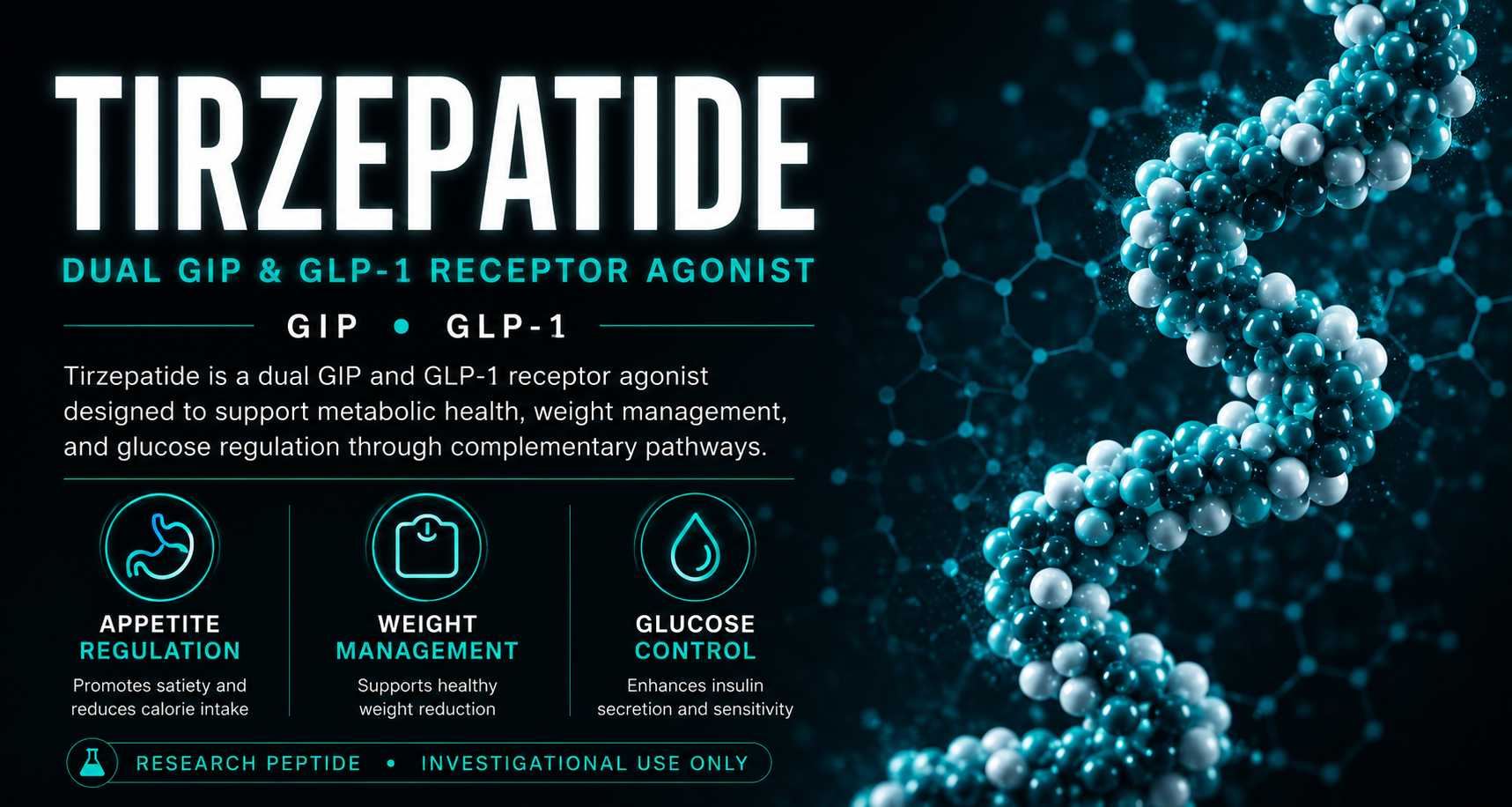
Tirzepatide is a dual GIP and GLP-1 receptor agonist developed for the treatment of metabolic disorders. It is widely studied for weight management, obesity, and glucose regulation due to its ability to influence appetite, satiety, insulin secretion, and energy intake. By targeting both GIP and GLP-1 receptors, Tirzepatide represents a significant advancement beyond traditional GLP-1-only therapies.
Mechanism of action
Tirzepatide acts on two hormone receptors involved in metabolic regulation:
Typical uses
Tirzepatide acts on two hormone receptors involved in metabolic regulation.
GLP-1 Receptor
Activation may:
Reduce appetite
Increase satiety
Slow gastric emptying
Improve glucose regulation
Reduce overall calorie intake
GIP Receptor
Activation may:
Enhance insulin secretion
Improve glucose metabolism
Support weight reduction when combined with GLP-1 activity
Improve metabolic efficiency
The combined action of GIP and GLP-1 receptor activation is believed to contribute to the significant weight-loss and metabolic improvements observed in clinical studies.
Typical Uses
Weight management research
Obesity research
Glucose regulation research
Metabolic health improvement
Reduction of excess body weight
Cardiometabolic risk factor improvement
Administration methods
Tirzepatide is typically administered via subcutaneous injection.
Common delivery methods include:
Prefilled injection pens
Reusable pen systems
Insulin syringes
Research and clinical use have generally utilized once-weekly administration schedules.
Risks & side effects
Reported side effects may include:
Nausea
Vomiting
Diarrhoea
Constipation
Reduced appetite
Abdominal discomfort
Indigestion
Side effects are often most noticeable during dose escalation phases and may improve over time.
Storage guidance
General storage recommendations include:
Store refrigerated when appropriate
Avoid freezing
Protect from excessive heat
Protect from direct sunlight
Follow manufacturer or supplier instructions
Storage requirements may vary depending on formulation.
Benefits
Significant weight-loss potential
Once-weekly administration
Appetite suppression
Improved satiety
Improved glucose regulation
Dual-pathway metabolic support
Strong clinical evidence base
Typical Research Dosing
Published clinical studies have generally evaluated Tirzepatide using once-weekly administration with gradual dose escalation to improve tolerability and reduce gastrointestinal side effects.
Research protocols have typically started with lower doses before increasing incrementally over time until a maintenance dose was reached.
Typical Research Protocols
Starting Dose
2.5mg
Escalation Schedule
Minimum 4 weeks
Maintenance Dose
5.0mg, 10mg, 15mg
Research protocols vary between studies. This information is provided for educational purposes only and should not be interpreted as a treatment recommendation.
Half-Life
Tirzepatide has a reported half-life of approximately 5 days, supporting once-weekly administration in both research and clinical settings.
Reconstitution Notes
Tirzepatide may be encountered in both ready-to-use and lyophilized (freeze-dried) formulations depending on the source.
Preparation, concentration, and handling requirements may vary significantly between formulations. Always follow product-specific instructions where available.
References
Peer-reviewed clinical research publications
Regulatory documentation
Obesity and metabolic disease studies
Scientific conference presentations
Manufacturer-sponsored clinical trials
Related
Disclaimer
Educational information only. Not medical advice. Consult a qualified clinician before starting, changing, or stopping any therapy.