Cagrilintide
Cagri
Weight ManagementOverview
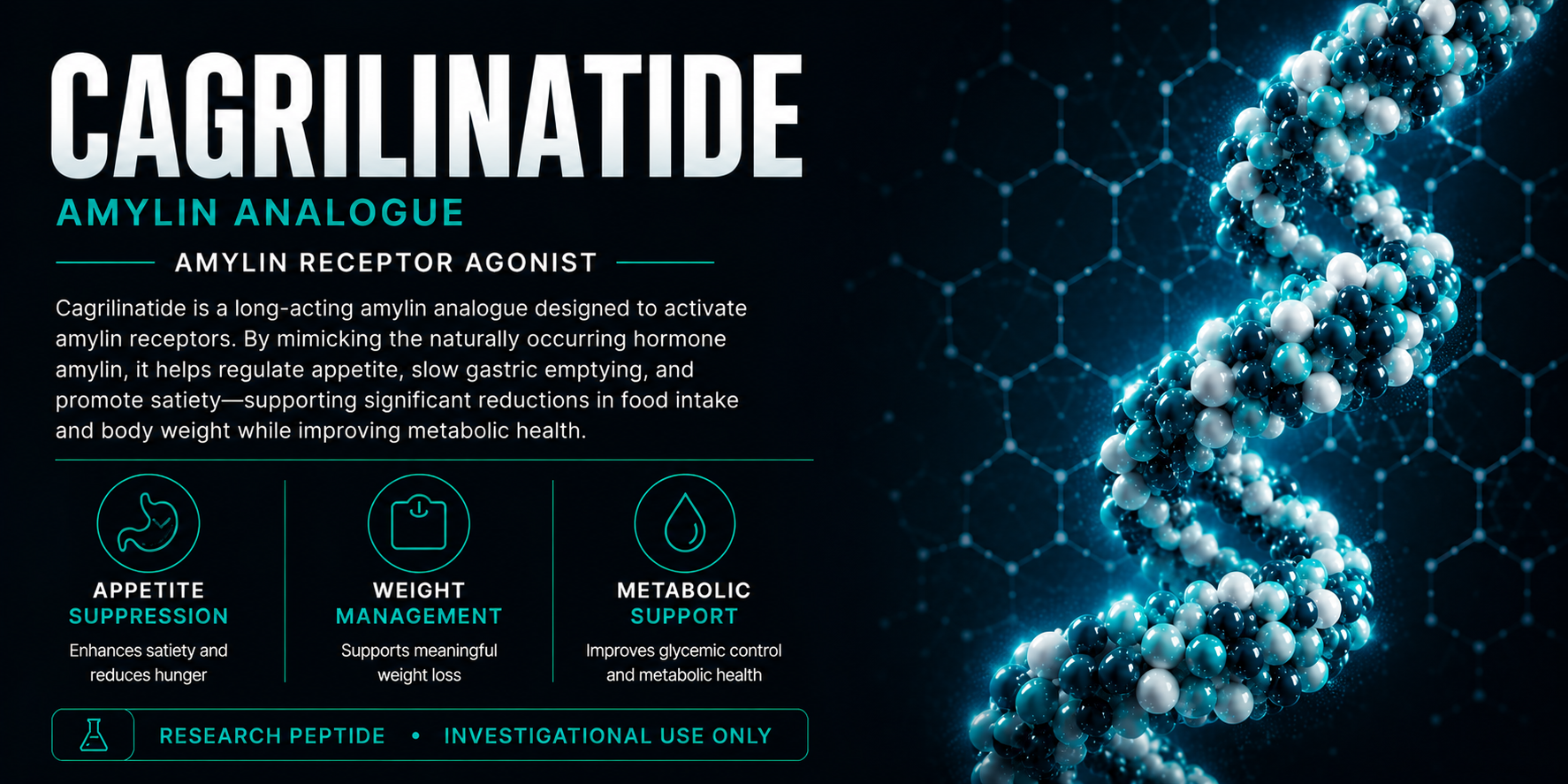
Cagrilintide is a long-acting amylin analogue developed for the study of appetite regulation, energy balance, and body-weight management. It is designed to mimic the actions of amylin, a naturally occurring hormone released alongside insulin by pancreatic beta cells after meals.
Research suggests that amylin signaling plays an important role in promoting satiety, slowing gastric emptying, and regulating food intake. Due to these effects, Cagrilintide has become a subject of significant interest in obesity and metabolic-health research. It is frequently studied both as a standalone compound and in combination with GLP-1 receptor agonists.
Mechanism of action
Cagrilintide acts as an analogue of amylin, a hormone involved in appetite and metabolic regulation.
Research suggests amylin receptor activation may:
-Increase feelings of fullness and satiety.
-Reduce hunger and food intake.
-Slow gastric emptying.
-Influence reward pathways associated with eating behavior.
-Support long-term regulation of body weight.
These mechanisms may complement the effects of GLP-1 receptor agonists, which is why combination approaches are frequently investigated in metabolic-health research.
Typical uses
Research involving Cagrilintide commonly focuses on:
-Obesity research.
-Weight-management studies.
-Appetite regulation.
-Satiety enhancement.
-Metabolic-health investigations.
-Combination therapy research with GLP-1 agonists.
-Energy-balance and food-intake studies.
Administration methods
Research protocols most commonly utilize:
-Subcutaneous injection.
Administration schedules vary depending on the study design and research objectives.
Risks & side effects
Reported side effects in research settings may include:
-Nausea.
-Reduced appetite.
-Gastrointestinal discomfort.
-Vomiting.
-Constipation.
-Diarrhea.
-Injection-site irritation.
Side effects are often most noticeable during initial exposure or following increases in administered amounts.
Storage guidance
Unreconstituted
-Store refrigerated between 2°C and 8°C.
-Protect from excessive heat and light.
-Keep sealed until use.
Reconstituted
-Store refrigerated between 2°C and 8°C.
-Avoid repeated warming and cooling cycles.
-Follow supplier recommendations regarding storage duration.
Benefits
Research suggests Cagrilintide may support:
-Appetite regulation.
-Enhanced satiety.
-Reduced food intake.
-Weight-management efforts.
-Energy-balance regulation.
-Metabolic-health research.
-Combination approaches with incretin-based therapies.
Typical Research Dosing
-Typical Starting Dose: 0.3 mg injected subcutaneously once every 7 days.
-Typical Escalation Schedule: Minimum 4 Weeks
-Typical Maintenance Range: 2.4 mg to 4.5 mg weekly.
-Typical Maximum Ceiling: 4.5 mg weekly.
Half-Life
Estimated half-life: approximately 6–8 days, supporting investigation in protocols utilizing infrequent administration schedules.
Reconstitution Notes
-Reconstitute with bacteriostatic water according to protocol requirements.
-Gently swirl; avoid vigorous shaking.
-Store refrigerated after reconstitution.
-Maintain sterile handling procedures at all times.
References
-Clinical investigations of Cagrilintide in obesity and weight-management research.
-Studies examining amylin signaling and appetite regulation.
-Research exploring combination therapy approaches involving Cagrilintide and GLP-1 receptor agonists.
Related
Disclaimer
Educational information only. Not medical advice. Consult a qualified clinician before starting, changing, or stopping any therapy.